How to look at crises differently and start over
The background noise wearing us down
Since 2020, we have lived through a sequence of emergencies unlike anything in our recent collective memory. The pandemic. Drought. The war between Russia and Ukraine. Staff shortages that have pushed companies and managers to work at an unsustainable pace. The conflict in the Middle East. And then new geopolitical tensions, new fronts opening up, new reasons to feel like we are on the edge of something.
Crises, of course, are nothing new. Anyone with entrepreneurial experience remembers exactly what 2007 meant, when the subprime mortgage collapse triggered a wave that wiped out years of trust and liquidity. What has changed is the volume. The intensity with which the media repeats, amplifies, and retransmits every negative signal creates a constant pressure that seeps into decisions, meetings, and conversations with shareholders. And it ends up distorting our perception of reality.
So the first thing to do is not find a solution. It’s to reassess the situation clearly. To filter out the background noise and see what’s really in front of us.
A Danish carpenter and the secret to never giving up
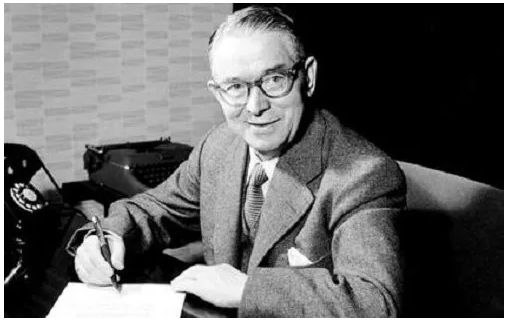 Ole Kirk Kristiansen was born in 1891 in a small village near Billund, the thirteenth child of a poor Danish farming family. Not exactly the profile you’d expect from the founder of one of the most iconic brands in history.
He worked as a craftsman, building wooden houses for local farmers. A smiling, generous, tireless man, yet constantly dogged by bad luck: twice his business was destroyed by fire, and then, to top it all off, even lightning struck.
Then came the Great Depression. On October 29, 1929, Black Tuesday, the New York Stock Exchange collapsed. Even the small community of Billund couldn’t escape it. Ole lost his main clients and was forced to lay off his last worker. He was left alone, with little money and a half-empty workshop.
That’s when he did the most counterintuitive thing possible. Instead of keeping his head down and waiting for better times, he changed course. During the Great Depression, the idea of making small wooden toys – ducks, cars, and figurines – proved to be a turning point. Using leftover materials, whatever he had on hand, he began building something new.
 In 1934, he decided to give those toys a name: LEGO. The philosophy he brought into production, and passed on to his son, was a relentless pursuit of quality. His motto was simple and absolute: "Only the best is good enough."
He died in 1958 without seeing the global success of the brand he had created. But he left behind something far more tangible than a company: he left a method. One that, in the face of crisis, chooses reinvention over cutting prices.
The price trap and the analysis no one makes
When markets tighten, the most common reaction is automatic: cut prices. Competitors do it. Purchasing departments demand it. Fear drives it.
But is it really the right move?
Anyone running a business knows, often all too well, that competing on price is a race to the bottom with no winners. And yet we end up there anyway, because there’s no time, no clarity, or no courage to take a step back and look at things differently.
That step back is called introspective analysis. Before looking outward, at competitors, markets, clients who come and go, you have to look inward. Which processes are inefficient? Which product lines cost more than they bring in? Where are energy and resources being wasted? In many cases, opportunities don’t come from the outside. They’re uncovered by eliminating what’s already not working. And then you have to move fast, because crises don’t wait for lengthy analysis.
Choosing to invest when everyone else pulls back
The story of Mozzanica & Mozzanica is not without its tough moments, and it would be dishonest to tell it otherwise. The period between 2011 and 2015 was long and difficult: the crisis was at its peak, clients seemed focused only on price, and competitors were moving in exactly that direction.
But the company chose not to follow that path.
Instead, it chose to double down on quality, to look inward, and to invest in its organizational structure precisely when it would have made more sense to do the opposite. It went to the banks, secured financing, hired new staff, and set clear strategies. And by the end of that journey, it reached a goal that once seemed out of reach: expanding into international markets.
That decision was not instinctive. It was the result of a clear understanding of the situation and of leadership willing to take a long-term approach, even when the present was difficult.
Leadership that brings people together
There’s a thread running through all these stories, from Ole Kirk Kristiansen to Mozzanica to any company that has managed to get back on its feet, and it’s often overlooked: the ability to maintain a clear direction even when everything feels uncertain.
The people inside a company sense exactly what those leading it sense. If an entrepreneur or manager conveys panic, panic spreads. If they convey clarity, not blind optimism but clarity grounded in concrete choices, then the team, too, can stay on its feet.
This means surrounding yourself with the right people. It means delegating well. It means giving others not the impression that everything is fine, but that things are under control and moving in the right direction. And above all, it means leading by example through tangible actions, not just words.
What remains
Anyone who chooses to lead a company knows, or should know, that sound sleep is not guaranteed. Living with uncertainty isn’t a flaw in the system: it’s part of the role.
But there is a difference between those who are swept along by crisis and those who move through it. That difference lies in the ability to set clear goals, to stay focused on them even when the context pulls in every other direction, and to find, even in the hardest moments, that small opening through which the light filters in.
Ole Kirk Kristiansen found it in a workshop filled with wood scraps, during the Great Depression, in Billund, Denmark. It was a wooden duck. No one would have bet on him. Today, those colored bricks are in the hands of hundreds of millions of children around the world.
Crisis is not the end of the story. It is often the very point where the most interesting story begins.