When we talk about the “right work environment,” our minds immediately go to modern spaces, cutting-edge technology and inclusive policies. But the true quality of a workplace is defined on a much more subtle level: people management. And that’s where leadership comes into play.
Ask a young professional what their dream workplace looks like and, most likely, the answer will include one of Google’s offices. Recreation rooms, open and colorful spaces, technology everywhere, advanced employee benefits and a corporate culture built around employee well-being. In today’s collective imagination, the idea of the “right work environment” has almost become synonymous with physical and practical comfort: ergonomic workstations, guaranteed connectivity, relaxation areas, balanced cafeteria menus and structured inclusion and sustainability programs.
There is nothing inherently wrong with any of this. Investing in the physical and technological well-being of employees is both smart and respectful. The real question every entrepreneur, executive and team leader should ask is whether it is truly enough. Does “quality in the workplace” end with the quality of the spaces and tools provided?
If we are honest, the answer is no. And the reason is simpler than it might seem.
The human side that deserves attention
One aspect is often treated as secondary in discussions about the ideal work environment: people management. Not human resources as an abstract category, but people in all their complexity, with their strengths, vulnerabilities, constructive behaviors and problematic ones, as well as relational dynamics.
You can design an office worthy of a major magazine cover, equip it with every technology under the sun and certify it according to the highest environmental sustainability and social inclusion standards. But if the human factor is not truly valued within those walls, that environment, no matter how beautiful and comfortable, will inevitably become an inadequate workplace. Latent tensions, unresolved conflicts and absent or toxic leadership are all it takes to turn even the most carefully designed space into a place where people no longer want to be.
The quality of a workplace, therefore, is not measured in square footage or technological features. It is built first and foremost on relationships, communication and direction.
Vision comes before the workplace: the role of owners, executives and managers
As we have explored in previous issues of FireMag, everything starts at the top. Before even discussing the work environment, we must talk about strategic direction: the course that the business owner, together with executives and managers, intends to set for the organization.
What is the company’s mission? How does it intend to pursue it? Through which workflows? With which human resources, and how should they be coordinated?
These questions are never purely organizational. They are, first and foremost, questions about people. Because human resources are not interchangeable gears: they are individuals with talents to nurture, behaviors to guide, potential to develop and team dynamics that must be built over time. A sense of belonging, collective motivation and mutual trust do not arise spontaneously. They are the result of conscious, continuous and intentional management.
And this is where the figure of the leader becomes the true cornerstone of the entire system.
Gordon Gekko vs. Captain Aubrey: a comparison of two leadership models
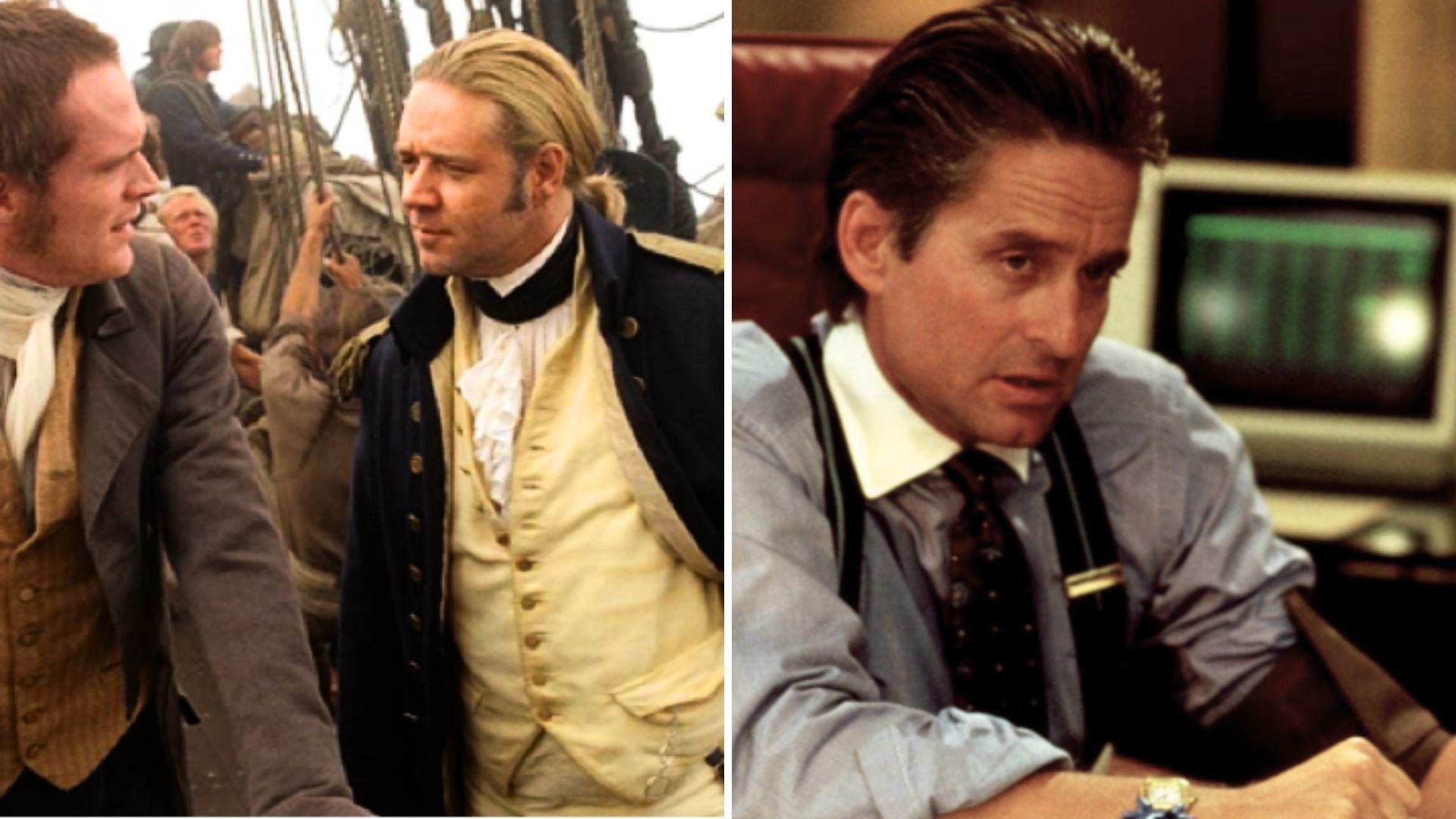 Cinema often portrays with remarkable clarity what organizational theory describes in more abstract terms. Two films in particular offer a powerful contrast in what it means to lead within a work environment.
The first is Wall Street, directed by Oliver Stone. Its protagonist, Gordon Gekko, masterfully portrayed by Michael Douglas, does not simply embody the financial greed that made the film famous. He represents something deeper and more dangerous: relational greed. For Gekko, the people around him are not colleagues or collaborators: they are resources to be used as long as they serve a purpose, and discarded when they do not. For him, loyalty is negotiable, and trust is a vulnerability to exploit. The result? A toxic environment where people’s motivation is fueled solely by fear or opportunism. It may deliver short-term results, but it ultimately collapses when the glue of coercion weakens.
The second film is Master and Commander, directed by Peter Weir. Captain Aubrey, portrayed by a young Russell Crowe, leads a diverse crew made up of men with very different personalities, backgrounds and skills. He does not have comfortable offices or corporate welfare programs. He has a ship, a mission and the ability to lead. Yet he succeeds in holding the team together, guiding it toward a shared direction and turning individual differences into collective strength. He does so through initiative, fairness and personal example. It is his daily conduct, not merely his authority, that builds team culture. And despite storms, hardship and moments of crisis, the crew remains cohesive and effective.
The difference between the two does not lie in the resources available. It lies in the type of leadership exercised.
The true quality of the workplace: leadership, objectives and monitoring
If there is one clear conclusion that emerges from this reflection, it is that there can be no good work environment without good leadership.
Without a clear vision, defined objectives and consistent monitoring of team performance, any workplace, no matter how well designed from a physical or technological standpoint, remains an empty container. It may seem like a pleasant place to spend the day, but it will never be a place where people grow, feel valued and give their best.
True quality in the workplace is the result of leadership that knows how to listen and how to decide, how to motivate and how to correct, how to manage differences and build a sense of team spirit that becomes the norm, not the exception.
Mozzanica’s approach: when workplace quality is a concrete responsibility
At Mozzanica, this is not a theoretical principle. It is an operational practice embedded in our daily work.
For our company, having a clear objective is not optional: it is the starting point of every activity in every single department. We do not operate without direction and we do not move by inertia: each area has a precise course and every manager is responsible for understanding it, communicating it and pursuing it together with their team.
Each leader is required to develop a structured annual development plan that addresses not only business results, but also the management of the people they are responsible for. Providing clear direction, motivating the team and closely monitoring performance are at the core of a manager’s role.
On one point in particular, Mozzanica’s position is firm and non-negotiable: bullying, harassment and manipulative behavior are not tolerated. No level of professional performance justifies relational toxicity. Anyone who damages the work environment through harmful conduct is addressed directly and, if necessary, removed. A single toxic individual can compromise the work and well-being of an entire team. That is not acceptable.
For us, creating quality in the workplace means conveying positive messages, organizing people strategically, consistently evaluating team performance and intervening promptly when something is not working. It means being present as leaders, not merely as organizational figures.
This is how, alongside continued investment in innovation and technology, Mozzanica builds a truly high-quality work environment: a place where people know where they are headed, feel guided with respect and are given the right conditions to perform at their best every day.