A tension as old as time
It is a dynamic as old as history itself: every older generation looks at the younger one with skepticism, while every new generation struggles to recognize the value of their predecessors. People criticize, judge and oversimplify. Older generations see young people as superficial, impatient and fragile. Younger generations see their elders as rigid, resistant to change and disconnected from contemporary reality. Two opposing perspectives, both incomplete and biased in the same way: focusing on differences instead of recognizing the shared values and strengths each generation brings.
Yet it is precisely in that unexplored space between the two perspectives that one of the most powerful resources available to a company can be found: the ability to create dialogue between different experiences and turn generational exchange into a competitive advantage. This is not just theory. It is a concrete choice that requires method, vision and a healthy dose of humility on both sides.
Experienced professionals: Strength built over time
To understand the value of professionals over 50, we must begin with the environment and context that shaped them. There was no hyperconnected technology keeping everyone constantly informed. There were no apps and no digital shortcuts. There was commitment, resilience and the need to tackle challenges using whatever tools were available at the time, often limited and insufficient.
This context gave rise to specific qualities: independence in decision-making, greater emotional stability and a wealth of consolidated experience that no algorithm can replicate. Those who had to make sacrifices to achieve what they wanted developed a level of judgment and resilience that cannot be learned from a manual. They know how to read situations, when to wait and how to make decisions even in uncertain conditions.
At the same time, however, this very strength can become a limitation. Professionals over 50 are often less inclined to embrace improvements and suggestions, can struggle to adjust to constantly evolving technologies and may gradually lose their ability to adapt. Experience, when treated as absolute certainty, can prevent people from staying open to change. And in a world changing at an ever-increasing speed, those who fail to adapt do not stand still; they fall behind.
The new generation: Speed, openness and fragility
Today’s young people were born into technology. For them, “digital” is not a tool to learn, it is the natural environment they live in. They tend to be more open-minded, faster and more inclined toward rapid learning. They also tend to have less tolerance for toxic environments and a sensitivity that previous generations did not have or did not allow themselves to express. They can recognize when something is not working and they speak up about it, often with a blunt honesty that catches people off guard.
But here too, these strengths come with vulnerabilities that cannot be ignored. The habit of having everything immediately breeds impatience and does not build resilience. Communication that happens mainly through digital channels does not encourage face-to-face interaction or the ability to engage in direct dialogue, which remains essential in any working environment. Anxiety, difficulty maintaining focus over long periods and an often problematic relationship with social media complete a picture that deserves attention. It is no coincidence that young people’s mental health is now at the center of public debate, with the misuse of social media standing out as one of the clearest warning signs.
Building bridges: Two examples from opposite sides of the world
How can we overcome this divide? How do we move from mutual judgment to a dialogue that creates value for both sides? We need concrete examples, stories that show how intergenerational exchange can work not just in theory, but in practice.
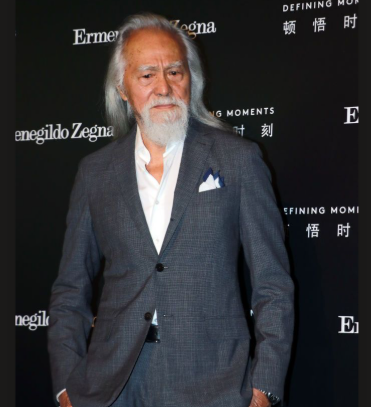 For a young person struggling to see anything other than rigidity and sluggishness in those over 50, Wang Deshun’s story can be enlightening. From a young age, Wang always set goals for himself and never turned down a challenge, a change or something new. Today, despite his age, he is still full of energy and eager to share his experience, meeting with young people from all over the world in the hope of inspiring them in their own lives. His story shows that age is not a limit, but a different point of view: those with more life experience have more to offer, as long as they maintain the curiosity of someone who never stops learning.
 Conversely, for someone over 50 who looks at younger generations with skepticism, the landscape of young Italian entrepreneurs rewriting the rules of the game offers a valuable perspective. Observing the tools they have used to achieve success, the technologies they have adopted and the mindset that has guided them can open the door to new ideas, new ways of working and learning approaches that did not even exist twenty years ago. This is not about abandoning one’s own experience, but enriching it.
By approaching things this way, both sides can let go of the misconceptions and assumptions that make people judgmental, closed off in their own perspectives and ultimately unable to engage in dialogue.
Mozzanica’s approach
Looking at Mozzanica’s history, we can see these same principles translated into clear business decisions. The topic of intergenerational dialogue was not addressed with statements of intent, but through concrete decisions carried out consistently over time.
Teamwork as a foundation
The first decision was cultural. The company has always chosen to focus on a clear concept: teamwork. In practice, this meant encouraging dialogue, connection and active listening. Values such as collaboration and shared problem-solving could not remain empty words; they had to become fundamental elements of the company’s day-to-day operations.
The company then chose to bring in people who could help it grow, managers and executives who fundamentally shared these values. Technical expertise and industry experience alone were not enough: what mattered most was a genuine openness to dialogue, collaboration and the ability to listen before making decisions.
This was reinforced by a structural decision: the entire leadership team, including the Board of Directors, took part in periodic training programs designed to further strengthen these qualities. This was not occasional training, but an ongoing commitment that helped create a shared language across different generations within the organization.
Investing in young people: When Plan B becomes Plan A
Over time, the company increasingly recognized the importance of having “plan Bs”, which in this case meant ensuring continuity by bringing young people into the organization. The reality is that time passes, and only companies that consistently plan for the future are able to endure.
This is where Jordan Mozzanica makes an important point: the mistake companies must avoid is expecting experience from the outset. Young people will never have the same experience as those who have been working for decades. However, they can acquire it through training and development, and it is first and foremost the business owner’s responsibility to invest in that process. The goal is not to expect young people to arrive “ready”, but to create the conditions that allow them to become so within an environment that supports them, challenges them and helps them grow.
Bridging generations: Working together, building together
Finally, Mozzanica has always encouraged interaction between different generations, both in day-to-day work and through team-building activities. The latter in particular, which are often informal and even fun, have proven to be powerful tools for breaking down generational barriers. When people share experiences outside a strictly professional environment, hierarchies soften, mistrust fades and individuals begin to see each other for what they truly are: professionals with different stories but a shared goal.
Results that speak for themselves
Stories matter. But when results follow, they validate the choices that were made.
It is thanks to this combination of decisions, teamwork as a core value, the recruitment of managers who shared this vision, continuous training, investment in young people and team building as a tool for integration, that, as HR Manager Stacey Mozzanica explains: “In 2025, Mozzanica was the number one company in Italy’s fire protection sector for hiring young people.”
This was not due to chance. It is the result of a clear strategy, one that chose not to pit generations against each other, but to bring them together. A strategy that invested in young people without expecting them to arrive already fully trained. One that built an environment where the experience of people over 50 and the energy of younger generations do not compete, but reinforce one another.
In a sector where technical expertise is everything and where every action has real consequences on people’s safety, this choice is not just smart: it is necessary. Because the future of a company is not built by choosing one generation over another. It is built by enabling them to work together.