When we talk about fire safety, we tend to think in terms of regulations, certifications, equipment and procedures. Yet behind every perfectly functioning system, every timely response and every reliable product, there is something less tangible but just as essential: business ethics.
From its founding by Natale Mozzanica to the present day, honesty and transparency have guided the company’s path toward excellence in fire protection.
The true meaning of business ethics
A quick online search brings up a clear definition: “a set of principles and values that govern a company’s behavior, that is, moral standards that influence not only the conduct of a company’s employees, but also that of shareholders, customers and even the community the company may impact.”
But what does this definition really mean? Who establishes these principles and values? And above all, why define them at all? In recent years, concepts such as “green”, “inclusivity” and “sustainability” have risen to the top of the agenda, but we want to go deeper, exploring the authentic motivations that lead a company to adopt a code of ethics that is more than just a façade.
The founder’s DNA: where it all begins
At the heart of any code of ethics lies, without a doubt, the blueprint – let’s call it DNA – that the founder of the company wants to imprint on its creation. The company’s image and the perception of its products depend on this vision. From the very beginning, the entrepreneur knows they must bring together different people, coordinate them and provide a clear vision so that everyone can take part in the project, in its “why,” to paraphrase Simon Sinek.
It is the founder who must define the basic principles to follow, the social and moral rules that will guide people within the organization toward strong teamwork. From this approach comes a quality product that is recognized by customers. Strong adherence to a code of ethics translates into a company that is recognized in the market by customers, suppliers and by the communities in which it operates.
When a company’s foundational DNA is built on solid principles – honesty, understanding, respect, unity – other aspects such as work organization, motivation and goal-oriented work naturally follow a clearer path.
Leading brands: where ethics drives excellence




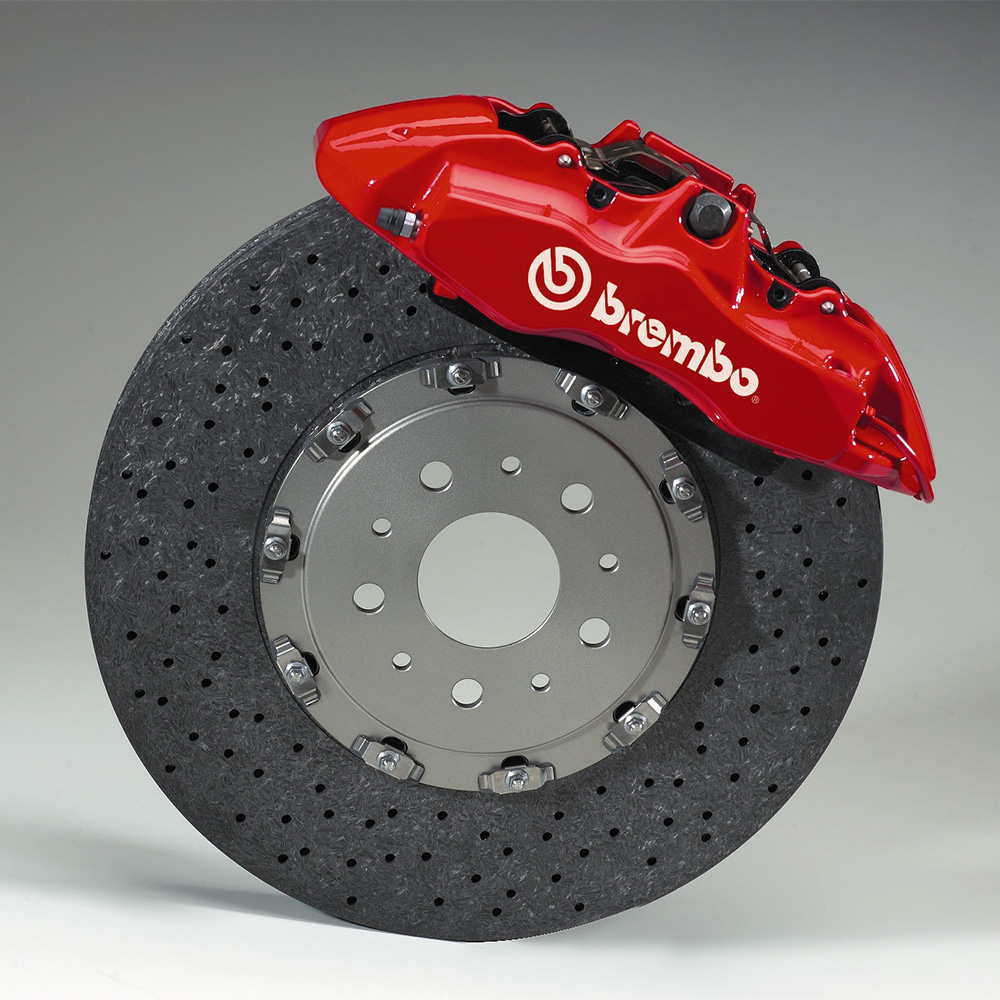
Think of companies whose names are synonymous with quality and reliability: Brabus in automotive tuning, Müller in dairy products, Lindt in chocolate, Scavolini in furnishings, and Brembo in braking systems. The primary focus is undoubtedly on product quality, which also justifies a premium price. But there would be no quality and no sales if everything did not start with a clear framework, rooted in the entrepreneur’s vision of what their company must be in order to enter the market.
Mozzanica: honesty as a pillar in a complex market
This brings us to our own sector, Italian fire protection, and to a concrete example worth sharing. Since Mozzanica’s founding, Natale Mozzanica envisioned a business committed to delivering the highest level of quality in fire protection. But to achieve this, he knew that the moral principles of honesty and transparency had to be the pillars on which the company would stand.
It was a courageous choice, it must be said. The Italian fire protection market has not always been “clean.” Uncertainty around penalties, a lack of proper oversight, and a widespread “we’ll deal with it when it happens” mindset allowed individuals of questionable integrity to gain ground. In this context, choosing the path of total honesty was far from obvious and could even appear to be a competitive disadvantage.
A working method built on uncompromising quality
From these principles emerged a rigorous way of working. Products had to undergo strict inspections. Fire extinguisher manufacturers even created special versions of their products, the “Mozzanica versions,” to meet the high standards required. This was not a matter of specific technical requirements, but of mindset: if you put your name on something, it must be flawless.
The Technical Department had to be made up of highly trained professionals, capable not only of delivering top-level fire protection engineering, but also of discerning the quality of different system component manufacturers. Technical expertise alone was not enough; it took critical judgment and integrity to always choose the best solution for the client, not the most convenient one for the company.
Training was also an essential characteristic of maintenance personnel, with honesty guiding every inspection. How many times is a technician tempted to “look the other way” when encountering a minor anomaly, to postpone an intervention, or to certify something that is not truly perfect? At Mozzanica, this temptation had to be eliminated by the company culture itself.
Along the same lines, office staff were no exception. Ethics could not exist in silos: either it permeates the entire organization or it falls apart.
Honesty and transparency: not just product, but people
Honesty and transparency were fundamental not only to Mozzanica’s products, but above all to building the unity and teamwork that are essential to the company’s growth.
This is an often-overlooked aspect of business ethics. It is not only about how you behave externally, toward customers. It is also about how people within the company interact: conflicts and unclear dynamics can never produce excellence.
Respect must be upheld, with constant awareness of the ethical foundations on which the company was built. And this respect, then as now, was not imposed from the top through rules and sanctions, but arose from the genuine sharing of the company’s values.
Continuity of values: Jordan and Stacey Mozzanica
Jordan and Stacey Mozzanica, both raised with these principles, have carried this working approach forward, ensuring generational continuity. Many family-owned companies lose their soul in the transition from one generation to the next because the founder’s values are not truly passed on or fully understood.
As HR Manager, Stacey plays a crucial role in selecting and training the people who join the company, making sure they share those core values. It is not just a question of technical skills: first and foremost, it is about alignment on values.
As Marketing Manager, Jordan chose to make these values explicit to the outside world. In 2019, he coined the slogan “Mozzanica is a company of people,” a powerful statement in a sector where the focus is often only on products, systems and technologies. That message confirms that, before machines, before fire extinguishers, before systems, there are people. People who work with integrity, who care about details, and who put customer safety above everything else.
In 2024, Jordan launched the “Our Values” series on LinkedIn, through which he presents, month after month, the values that are lived every day within Mozzanica. This is not marketing in the traditional sense of the word: it is an act of transparency, a way of saying “This is who we are, this is what we believe in, so judge us on this too.”
Ethics as a guarantee of long-term success
Ethics in business is a fundamental value.
We see companies struggle not because they lack technical expertise or market demand, but because they have lost their moral compass. Internal conflicts erupt, quality declines, and reputations deteriorate. And in our sector, where human lives depend on the quality of our work, this is not just a business failure: it is a moral responsibility left unfulfilled.
When, however, ethics is upheld consistently over time, a company can secure lasting success. This is not about surviving market trends or economic crises. It is about building something solid, something that endures because it rests on unshakable foundations.
In Mozzanica’s case, the honesty and transparency chosen by Natale Mozzanica decades ago continue to be the company’s true competitive advantage. In a market where not everyone operates with the same integrity, being recognized as a reliable partner, one you can always count on, is worth more than any advertising campaign.
Business ethics, when it is authentic and not merely stated, becomes a company’s most valuable asset.