Easy to talk about, hard to build
 Ken Blanchard, motivational speaker and business leader, often said that “None of us is as smart as all of us.” It is one of those phrases we are happy to share, along with many others built around the same idea: there is strength in unity. They sound good and they seem obvious, almost self-evident.
And yet every leader, every manager and every entrepreneur knows that behind those words lies one of the most complex challenges in business. People have their own minds, their own ways of working, their strengths and their weaknesses. Creating the conditions for them to truly work together and move in the same direction is not impossible, but it is far from automatic.
The difference between a team that works and a group of individuals simply sharing the same space does not come down to luck. It depends on a series of deliberate choices, made before a person is even hired and reinforced day after day. To understand this, it helps to start with two stories far removed from our industry, but able to explain better than any theory what happens when unity is present and what happens when it is missing.
Two stories at opposite ends of the spectrum
Germany in 2014: the strength of a collective without superstars
In football, it is rare to see a team win without relying on one standout champion. That is exactly what the German national team was when it won the 2014 World Cup: a collective in which no single player was “the” player.
Each player knew exactly what was expected of him. Each was driven by a shared goal. Everyone was ready to collaborate, adapt and change the team’s setup immediately whenever the match required it. Behind this balance was head coach Joachim Löw, who knew how to read the talent he had in front of him, recognize each player’s strengths and weaknesses and guide them toward a common objective.
Winning the World Cup was the clearest proof of this. But the fact that people continued to talk about that team long after the tournament ended shows that the result was not a one-off: it was the outcome of a method applied to people.
Apple, Jobs and Sculley: what happens when unity begins to crack
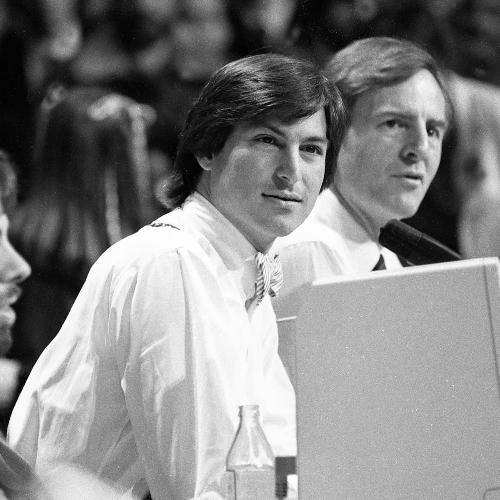 The other side of the coin is an equally famous example. When Steve Jobs was leading Apple, the sense of belonging was so strong that the signatures of the team who had helped develop each Macintosh were engraved inside its casing, hidden from the customer’s view. An invisible detail that revealed just how deeply that group felt part of something.
Then something changed. Jobs convinced John Sculley, then president of PepsiCo, to become Apple’s CEO. At first, the company grew and entered new market segments. But in 1985, it was Sculley himself who led the board of directors to vote for the removal of Jobs, the company’s founder.
The consequences emerged over time: after its initial success, the company experienced declining sales, unclear strategic direction and failed projects. In 1993, Sculley left Apple and years later, Jobs said he had “hired the wrong man.” Only after Jobs returned in 1997 did the company enter a new phase of growth. One uncomfortable but revealing question remains in the background: what internal dynamics must have taken hold for a group to reach the point of pushing out its own founder?
The two stories tell the same truth from opposite sides. Unity is not a spontaneous feeling that arises on its own. It is a fragile structure that must be nurtured, and that one wrong person, if left free to act, can put at risk.
How Mozzanica builds and protects unity
For a company operating in the fire protection sector, where every intervention has real consequences for people’s safety, team cohesion is not simply a matter of workplace culture: it is an operational factor. This is why Mozzanica approaches the topic methodically, through a process that begins long before hiring.
Four choices guide this process.
First choice: know what you want before looking for the right person to make it happen
Before hiring the right people, it is essential to be clear about what you want to do and how you want to do it. This does not only apply to people, but also to resources, equipment and capital. Without this clarity from the outset, any search for candidates risks starting from the wrong question.
Second choice: look at people, not just résumés
Once the framework has been defined, the search for people begins. Mozzanica’s HR Department knows exactly what qualities the various managers are looking for and, with the support of specialized third-party firms, carries out targeted selection processes. At this stage, the focus is not only on technical skills. What matters is understanding each candidate’s strengths and weaknesses and imagining how they might have a real impact on a workplace built on everyday relationships.
Third choice: provide direction, purpose and recognition
Once the person has been chosen, the work is not over: it begins. Clear guidance, purpose and motivation are needed. People joining the company need to understand that Mozzanica recognizes the qualities they bring and that everyone, including the newest arrival, has a specific role within the process. From this point on, the task of executives and managers is to manage both the individual and the group at the same time, while staying focused on the company’s objectives. This is the moment when a new hire stops being a cost and becomes an active part of the collective.
Fourth choice: manage mistakes before resorting to drastic decisions
Mozzanica has also experienced situations where people brought into the company later proved not to be the right fit, bringing values that were not aligned with those of the business. In these cases, the first response was not removal, but analysis of the situation.
Managers, executives and the HR Department first focus on managing the situation and attempting to bring the person back on track: helping them understand where things have started to drift, determining whether the issue stems from a period of frustration and identifying a way for them to rejoin the group. Only when, despite these efforts, the person does not respond does drastic action become the final step. Not the first reaction, but the last resort. It is a choice that protects the team without giving up on the value of people for as long as possible.
The common denominator
Germany won in 2014 because a coach turned individuals into a collective. Apple faltered when that collective began to crack from within. Between these two stories lies a truth that applies to every business: unity is not proclaimed, it is built. It is built through clear objectives, careful selection, recognition of each person’s role and the ability to manage conflict without taking shortcuts.
Mozzanica has chosen this path. Not because it is the easiest one, but because in a company where the quality of service depends on the quality of the people who deliver it, a united team is not an added value. It is the very condition for doing the job well.
None of us is as smart as all of us – as long as we build that “all of us” every day.