The “Amazon mindset” and the illusion of the lowest price
How does a company view its suppliers? What kind of relationship does it want to build with them? These may seem like trivial questions, yet they are crucial to the quality of any product or service.
In recent years, the rise of digital commerce and the growing flow of information across websites, blogs and social media have changed the way suppliers are selected. Buyers often believe they already have everything they need: reviews, comments and price comparisons. But they rarely dig deeper. Almost no one takes a closer look at a product’s actual quality, the manufacturing process that determines its cost, or the reliability and stability of the company behind it. A well-established, dependable business that can guarantee continuity comes with operating costs, and those costs are reflected in higher prices. This is what some have called the “Amazon mindset”: the habit of judging everything by its product listing and final price while overlooking everything behind them.
Another critical factor is the growing decision-making power entrusted to procurement departments where decisions are often made by people who focus not on a product’s features or quality but solely on the bottom line of a quote. This is a discouraging dynamic for the most reputable suppliers, especially when a lower price clearly does not mean equal quality. And yet it happens, sometimes forcing good companies to make far-reaching changes simply to survive.
When every decision is driven by price, and there is no well-structured company with a network of qualified suppliers supporting an offer, problems become almost inevitable. So does dissatisfaction among end customers.
The flip side: when a supplier relationship becomes a partnership
Fortunately, not every company takes this approach. There is another way to do business, one adopted by companies that have a clear vision of what they want to offer and how they want to position themselves in the market.
These companies do not treat suppliers as costs to be squeezed but as partners in building the product. They invest time, effort and analysis in developing strong relationships based on collaboration and mutual benefit. The logic is simple: if the quality of what comes in at the start of the supply chain is right, the end product delivered to consumers will be too. The quality customers experience almost always stems from a carefully managed supply chain, not from a discount wrung out at the last minute.
This is not theory. Some of the world’s best-known companies owe a significant part of their success to exactly this kind of relationship.
Three partnerships that have made a difference
Ferrari and Brembo
 The partnership between Ferrari and Brembo is one of the longest-standing in the industry. For around half a century, the Bergamo-based company has supplied Ferrari’s racing team with the braking systems it needs to compete at the highest level. The relationship has evolved over time, and both companies have chosen to extend it into their latest programs.
This is far more than a standard supply agreement. It is a technical collaboration in which the supplier develops tailor-made solutions to meet the extreme demands of motorsport, with every advancement emerging from joint efforts. More effective braking systems give Ferrari a competitive edge on the track, and the trust built over fifty years is worth more than any price negotiation.
Apple and Corning
 The collaboration between Apple and Corning dates back to 2007, when the two companies worked together to develop the glass for the first iPhone. Since then, the partnership has never stopped; if anything, it has become even stronger through mutual investment and years of research carried out side by side by engineers from both companies.
Two dates illustrate the nature of this relationship. In 2025, Apple announced a $2.5 billion commitment to manufacturing all the cover glass for iPhone and Apple Watch in the United States, at Corning’s facility in Kentucky. Eighteen years earlier, that same facility had produced the glass for the very first iPhone.
The point is not the amount involved but the principle behind it. Apple did more than purchase a component: it helped develop the technology, provided financial support to its supplier and turned it into a strategic partner. A relationship built on shared innovation, trust and mutual investment can create a competitive advantage that a straightforward purchasing agreement never could.
Rolls-Royce and Boeing
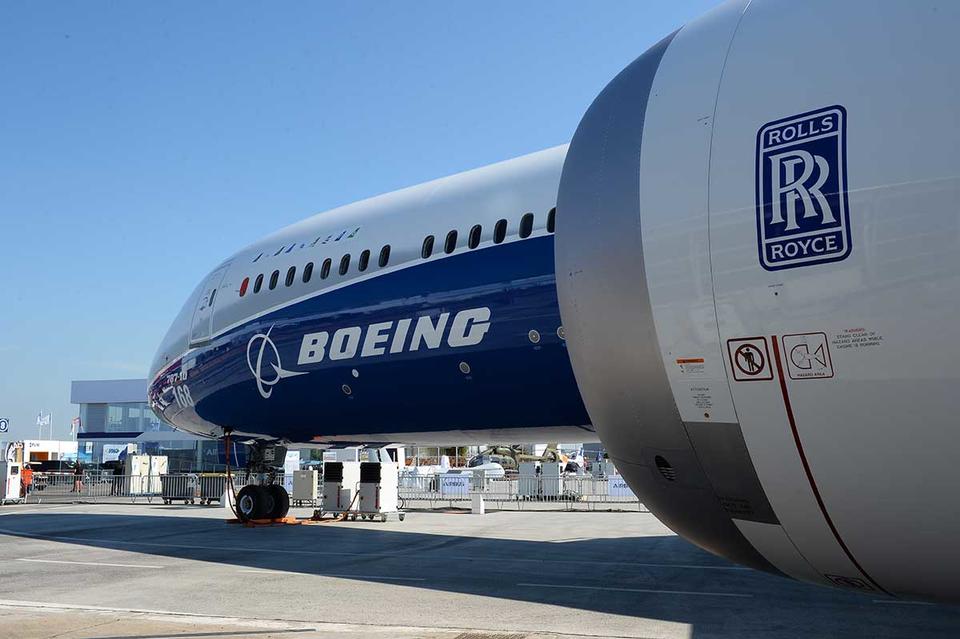 The collaboration between Rolls-Royce and Boeing has its roots in decades of joint aerospace programs. The best-known example is the development of the Trent 1000 engine for the Boeing 787 Dreamliner, a project in which the engine maker and the aircraft manufacturer worked together from the earliest stages.
It is a textbook example of long-term industrial partnership. It is not simply a matter of delivering a finished component and moving on. It means bringing different areas of expertise together around a common goal, where one partner’s results directly determine the quality of the other’s product.
How Mozzanica works with its suppliers
The examples above involve large corporations, but the same principle applies on a smaller scale. Mozzanica’s own history is proof of that.
Over nearly forty years of business, Mozzanica has built lasting relationships with its suppliers. They rest on the principle Natale Mozzanica established when he founded the company: to deliver the best possible quality in fire protection. Having an in-house maintenance division has also enabled Mozzanica to assess the real-world results of its decisions.
This approach is evident even in the simplest products. Mozzanica began by examining fire extinguishers, studying how each individual component was made. On several occasions its supplier manufactured extinguishers as part of a dedicated “Mozzanica line,” replacing certain components with alternatives considered more reliable, sturdier and longer-lasting. This attention to detail later paid off with end customers, resulting in substantial sales volumes of equipment whose quality stood out, particularly during training exercises.
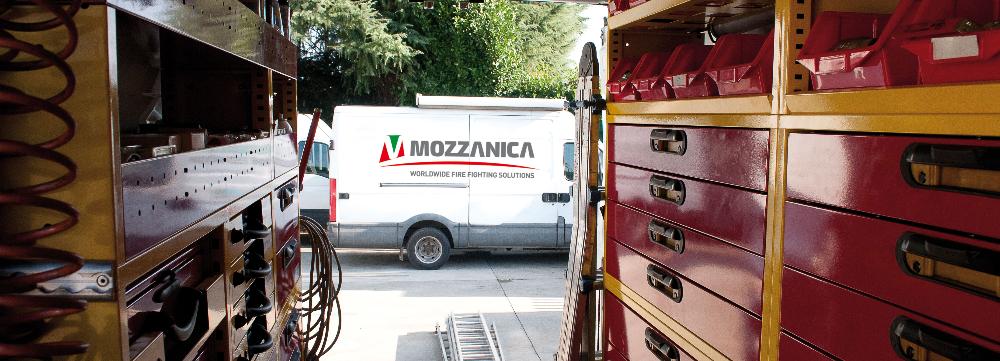
The same approach applies to subcontractors and installers, with whom Mozzanica has established multi-year partnerships. The environments in which the company operates require personnel who are properly trained, equipped and organized. For the technical and service departments, being able to rely on a solid subcontractor who accurately understands the client’s needs is the best guarantee they can have. This is the foundation of a truly collaborative relationship, focused on continuous improvement and solving problems in the field together.
The common denominator
A company must always have a clear understanding of what it wants to offer the market and how it intends to achieve its goals. Getting there takes more than making the right choices: it requires vision and strategy. That strategy must also shape the company’s relationships with its suppliers, who play a key role in creating the final product.
Although they operate in different industries and have different histories, Ferrari, Apple and Mozzanica have chosen the same path: rather than squeezing their suppliers, they have built something lasting together. Because the quality customers recognize is never achieved at the final link in the supply chain. It is built much earlier, through the way a company chooses and treats the people and businesses that help it deliver what it promises.