Entrepreneurs are often described as “visionaries.” It’s almost an automatic compliment, a verbal shortcut we use for people who have succeeded, as if seeing a little further than everyone else were enough to earn the label. That is certainly how the word is commonly understood: a visionary is someone who comes up with an idea first, who senses something before everyone else does. It is a convenient and reassuring definition, but a partial one. It captures the moment of intuition, not everything that comes after it.
In his book “Primal Leadership,” Daniel Goleman goes deeper and makes a clear distinction between the visionary and the merely intuitive. As Goleman describes it, the visionary entrepreneur is someone who:
focuses on building a shared vision that reaches beyond the day-to-day and gives the team a clear sense of direction. With their charisma and ability to imagine a better future, the visionary leader becomes a point of reference who can bring people together around a common goal.
Seeing far ahead, then, is not enough. You also have to be able to lead others there and turn that vision into a path people can walk with you. It’s the difference between daydreaming and building something that lasts.
Where a vision comes from
Every vision starts from something smaller and more fragile than the story written after the fact would suggest: an idea, an intuition, the precise moment when someone says to themselves “I think this plan is a winner” while nobody around them is really convinced yet. Company histories often dismiss that moment in a single line, but for the person living through it, it can mean whole nights of doubt, numbers crunched again and again, decisions put off and then made anyway. Often it is the memory of past successes that builds the necessary confidence and makes it possible to aim for a goal that, at that point, exists only in the mind of the person who imagined it.
There is one line, now a classic of management thinking, that helps shed light on this step:
Alan Kay, the American computer scientist who was one of the pioneers of the modern graphical user interface, first voiced this idea in 1971 at a meeting of researchers at Xerox PARC in Palo Alto, the California research center that gave rise to innovations such as windowed interfaces and the mouse as we know it today. Kay put the line in writing several years later, in 1983, in the EDUCOM Bulletin, but the original insight dates back to that 1971 meeting: “The best way to predict the future is to invent it.”
It is a subtle but crucial distinction. The point is not to guess what will happen, which still leaves the initiative in the hands of chance, but to actively create the conditions for a certain future to become reality. From there, a different kind of work begins, one that’s less romantic but just as important: choosing the right people, persuading others to follow you while the project still exists only on paper, and putting the first operational plans in writing. This is the step that separates a brilliant insight, which may well remain just that, from a project that can genuinely take shape in the real world.
Three stories of vision, three different industries
A few examples from completely different worlds show clearly what it means to turn an insight into a success that can change an entire market. The first comes from the Italian confectionery industry, and it is probably the closest to home for us, at least geographically:
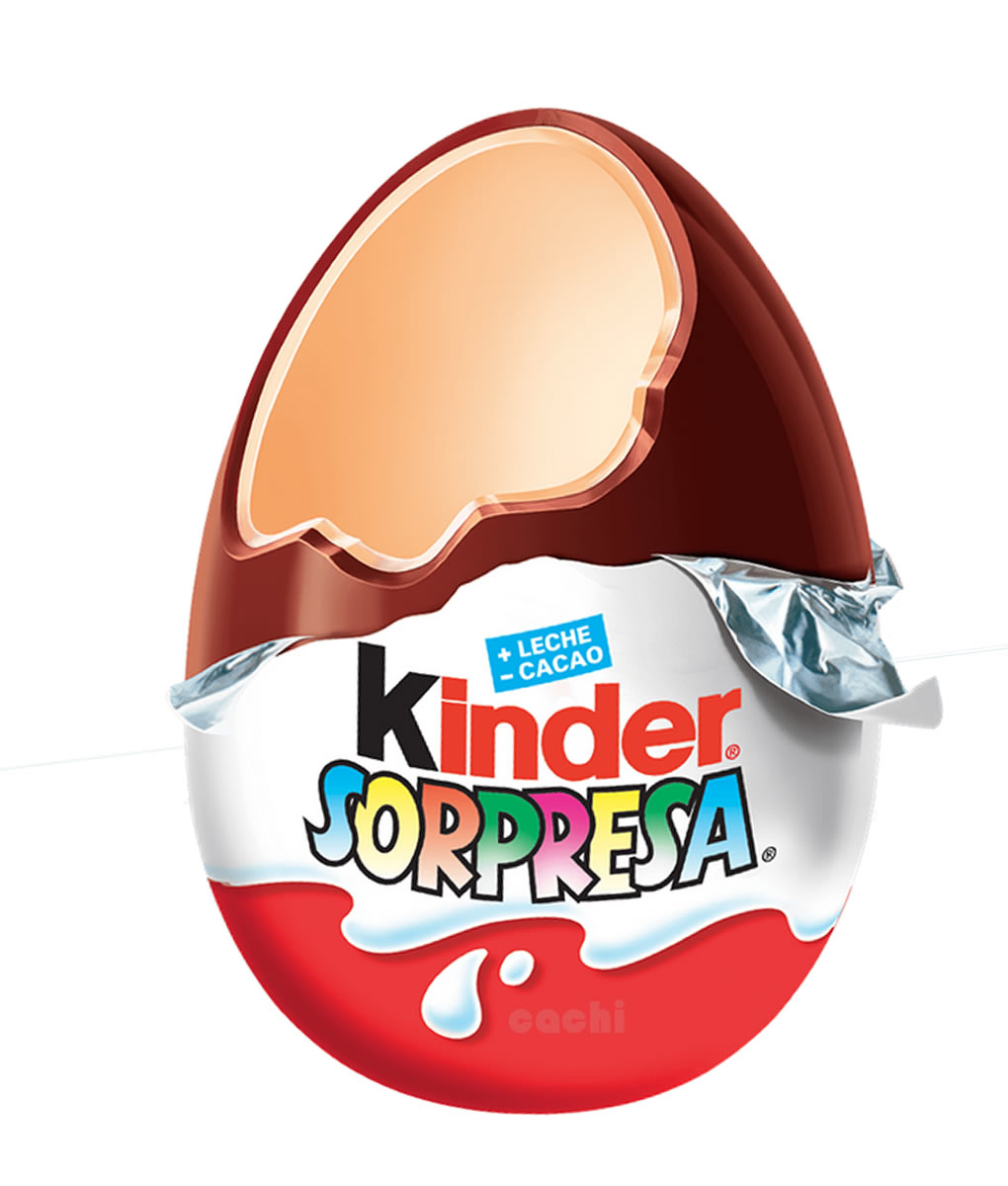 In 1968, Michele Ferrero decided to challenge the long-standing tradition of chocolate eggs being associated with just one season of the year. He did so with a line his colleagues still remember today: “Starting tomorrow, every day will be Easter.” That intuition, pursued despite internal objections, gave rise to the idea of a small chocolate egg available all year round. A few years later, William Salice gave that vision concrete form by designing an egg with a surprise inside, combining play and chocolate in a single product. The result was Kinder Surprise, one of the most recognizable products in the world, which still brings a smile to millions of children today. Throughout his life, Salice refused to take credit for the invention: “Ferrero is the inventor. I simply carried out his idea.”
It is a story that says more about the relationship between those who imagine and those who build than any analysis could: when vision and execution work together, they can create something that no competitor in the children’s market has truly managed to match since.
The second example comes from the automotive world, and this time it’s the numbers that tell an equally revealing story:
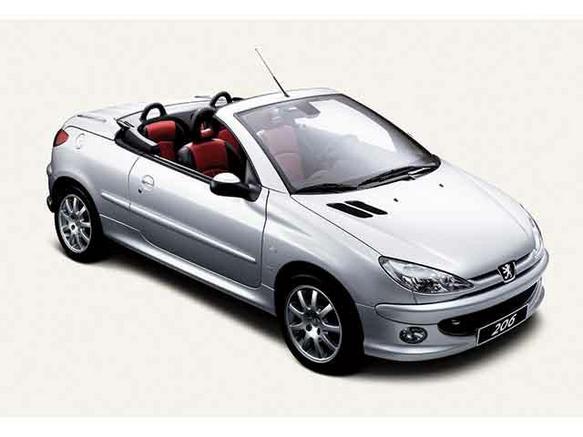 Until the late 1990s, the retractable hardtop, the roof that turns a coupé into a convertible in a matter of seconds, was a luxury reserved for models such as the Mercedes SLK. In 2000 Peugeot launched the 206 CC with a clear idea: bring that same technology to a small, affordable car. The trade publication Motor1.it went so far as to call it “the first coupé-cabriolet not aimed solely at the luxury car market.” The result was a commercial success that ran for more than seven years of production, until March 2007, followed by a second generation, the 207 CC. According to Quattroruote’s Ruoteclassiche magazine, very few other manufacturers achieved that kind of continuity in a segment that, precisely in those years, was just beginning to decline.
Other carmakers, including Nissan with the Micra and Opel, tried to copy the formula but never matched its commercial success or its place in people’s memories.
The third example comes from what looks, at first glance, like the restaurant business.
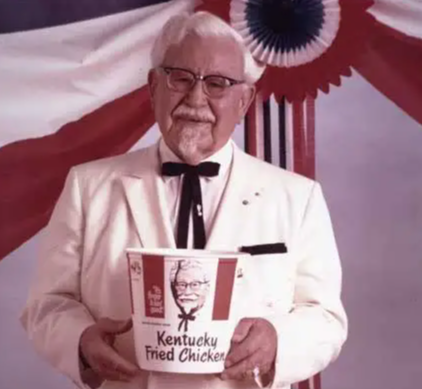 Harland Sanders, the founder of Kentucky Fried Chicken (KFC), held a number of jobs in his early life, including steam engine stoker, insurance salesman and filling station operator. He began selling fried chicken from his roadside restaurant in North Corbin, Kentucky, during the Great Depression. During that time, Sanders developed his “secret recipe” and his patented method of cooking chicken in a pressure fryer. Sanders recognized the potential of the restaurant franchising concept, and the first KFC franchise opened in South Salt Lake, Utah, in 1952. From 1950, Sanders began to dress the part of “the Colonel,” growing a goatee, wearing a black frock coat (later switching to a white suit) and even bleaching his mustache and goatee to match his white hair.
Other remarkable ideas came to be associated with the brand he built, such as the slogan “Finger lickin’ good” and the famous chicken “bucket.” Perhaps this is why John Y. Brown Jr. remembered Sanders as “a brilliant man with a gourmet flair for food, a visionary and a great motivator, with the style of a showman and the discipline of a Vince Lombardi.
It was more than a restaurant: it was an industry built step by step around an idea that, at the start, few people would have bet could work on that scale.
Why vision alone is not enough
Three different stories, from three industries that could hardly be further apart, share a common thread: behind each of these ideas there was, and had to be, a solid operational plan. Instinct opens the door, but it isn’t enough to get you through it. You need to analyze the market properly, identify its risks, carefully assess the investment and timing, and surround yourself with the right people to carry the project forward.
One of the most frequently cited contributions to the management literature on this subject is still “Building Your Company’s Vision,” published in Harvard Business Review in 1996 by James Collins and Jerry Porras. The two authors draw a clear distinction between two elements that are often confused in practice. On one side is the company’s core ideology, made up of values and a purpose that, in their words, “require no external justification.” On the other is the envisioned future, which includes ambitious objectives the authors themselves call “Big, Hairy, Audacious Goals,” capable of mobilizing an entire organization over a horizon of ten to thirty years.
The distinction is useful outside academic settings too: vision is not only a distant destination to reach, but also a set of principles that hold steady throughout the journey, even as specific goals change along the way.
Michele Ferrero himself, often asked about the secret behind his company’s success, never put it down to brilliant ideas alone. He spoke instead of a method that also demanded persistence and determination: “My secret? Always do things differently from everyone else, keep the faith and stay the course.”
Vision and family businesses: a challenge for 90% of Italian companies
There is a reason why vision matters to Mozzanica in particular, and it is the same reason it matters to the vast majority of Italian companies:
Family-controlled companies make up around 90% of Italy’s business landscape today and employ roughly three quarters of the total workforce. Some analyses of the subject, which have also been picked up by the business press, estimate that only 30% of family businesses survive the transition from the first to the second generation, just 13% make it to the third and a tiny share, 4%, reach the fourth. According to these studies, the lack of a clearly defined succession strategy accounts for more than 70% of failures during generational transition. The AUB Observatory stands on firmer statistical ground. Promoted by AIDAF, UniCredit and Bocconi University, it takes stock every year of the health of Italy’s largest family businesses. Its 16th edition, presented at Borsa Italiana in February 2025, found that the number of family businesses with revenue above €20 million had grown by 50% over the past decade, to more than 15,800, with combined revenue of over €1.2 trillion and nearly 3.4 million employees in Italy and abroad. It is no coincidence that, edition after edition, the Observatory devotes a growing share of its research to generational transition and to the profiles of the so-called “next generation.”
Succession, then, is no administrative detail. It is often the real dividing line between a company that keeps growing and one that stalls, and it is here, more than in any single year’s accounts, that the most delicate part of a company’s continuity is decided. Mozzanica, whose roots lie in the choices Natale Mozzanica made in the late 1980s, sits squarely within this dynamic. None of the insights described in these pages, from maintenance reports to digitalization to a new way of communicating, is an isolated episode. Each is one piece of a vision that has already spanned more than one generation and that we continue to nurture today, with our sights already set on 2027.
Our insights
This space between an idea and its realization is exactly where several moments in Mozzanica’s history belong: they are insights that have helped us stand out in the market over the years, and they follow the same pattern as the examples above, applied this time to our own industry and our own history.
Toward the end of the 1980s, hardly any company in our industry issued a detailed document after a maintenance visit: they simply signed the logbook. Natale Mozzanica chose a different path, one that would set the company apart and strengthen its ties with its customers even further. That choice gave rise to our maintenance reports, tailored to each type of system and complete in every detail. Shortly thereafter a similar but complementary idea emerged: maintenance specifications. Even before an order was placed, these documents showed the customer how solid our technical and regulatory knowledge was, and once we had won the contract, customers could see it borne out in practice, in how well trained our staff were and in the equipment we used.
In the same spirit, over the years we have also chosen to look beyond the markets we knew best. Moving into the Marine and Oil & Gas sectors meant, first of all, pinpointing exactly where they had real needs that we could meet. That led to our decision to enter the cruise industry and to bring in key people with new ideas, contacts and the organizational know-how needed to support that leap, as well as in-depth knowledge of how our competitors operated.
 Another insight, perhaps less visible but no less important, concerns digitalization. In 2010 we laid the groundwork for a project that would give our customers a single portal for all their maintenance documentation, and in 2011 our first handheld devices arrived. They were big, bulky and a far cry from today’s, but they made us one of the first companies in our industry to adopt this kind of technology. The aim was to speed up every stage of the process, from updating maintenance reports to invoicing.
Finally, a more recent insight: a new way of communicating. Fire protection has never been an industry that gets much public attention. The idea was to use social media and our website differently, building a narrative and a way of presenting data that could reach very different audiences, from the United States to Italy and Asia. We needed to get people “excited” about our company, and the interest we patiently built over time has since turned into actual new orders.
From reactive to predictive maintenance: a changing industry
The direction in which the entire industrial maintenance sector is moving today offers another way of looking at the choice Mozzanica made in 2010. When the first handheld devices arrived, the goal was to digitize documentation and speed up work in the field:
Since then, that same push toward digitalization has become part of a broader shift that is redefining the very idea of maintenance. It is the move from reactive maintenance, which steps in once a failure has already occurred, to predictive maintenance, which anticipates failures by analyzing data collected from the systems themselves. A study by the Deloitte Analytics Institute, still among the most widely cited references on the subject despite dating back to 2017, quantified the benefits of this change: predictive maintenance can increase equipment productivity by up to 25%, reduce unexpected breakdowns by up to 70% and cut overall maintenance costs by 25%, while increasing actual uptime by 10 to 20%. The same study estimates that unplanned downtime alone costs industrial manufacturers worldwide $50 billion a year.
That figure helps explain why so many companies have stepped up the digitalization of their maintenance processes in recent years. These numbers hit close to home for our industry too. Anyone who works in maintenance and technical support, as we do every day at our customers’ sites, knows that the difference between stepping in before a problem and stepping in after it is never purely a technical question: it is a matter of trust, service continuity and relationships built over time. The same insight that led to our first handheld devices in 2010 is now evolving within a much broader digital transformation of the industry, and it is against this backdrop that the company is already working toward its new goals for 2027.
Looking ahead to 2027
New goals for 2027 are already in the works. Some of them no longer come from a flash of vision alone but from more structured forward planning, built on analysis, data and scenarios developed together. What remains unchanged is the underlying spirit, the same one that runs through every story told so far: intuition and the ability to envision a goal that is still far off will always have a place at Mozzanica. It is a thought that finds an almost perfect echo in a line written nearly a century ago, in a completely different context, that still captures what having a vision for a business really means:
Antoine de Saint-Exupéry, the French writer and aviator best known as the author of “The Little Prince,” wrote in his posthumously published work “Citadelle”: “As for the future, your task is not to foresee it, but to enable it.”